


Ireland's New EV Charging Strategy 2026-2028: What It Means for You
On 26 February 2026, Minister for Transport Darragh O'Brien launched a public consultation on Ireland's Draft National EV Charging Infrastructure Strategy 2026-2028. With over 212,000 EVs now on Irish roads and record sales continuing into 2026, the government is committing €120 million this year alone to ensure charging infrastructure stays ahead of growing demand. But what does this strategy actually mean for Irish homeowners considering an EV, and how should you prepare?
The Strategy in Plain English
The Draft National EV Charging Infrastructure Strategy 2026-2028 sets out Ireland's plan to expand and future-proof the national charging network through to 2028. This builds on the previous strategy and delivers on the Programme for Government's commitment to keep charging infrastructure ahead of EV adoption as more Irish drivers make the switch.
The strategy focuses on four key areas:
- Neighbourhood charging for people without access to home charging, particularly apartment dwellers and those in higher-density housing
- High-powered charging hubs along national roads and main transport corridors for long-distance travel
- Commercial and fleet charging including depot and en-route solutions for heavy-duty vehicles
- Accessibility and interoperability ensuring all infrastructure meets universal design principles
The strategy also ensures Ireland meets its obligations under the EU Alternative Fuels Infrastructure Regulation (AFIR) while maintaining balanced rollout across all regions. A mid-term review in 2027 will assess progress and adapt to evolving technology and user needs.
Why This Matters for Homeowners
Ireland has now surpassed the 2025 Climate Action Plan target for EV registrations, with January 2026 seeing a record 7,319 battery electric vehicles registered in a single month. As Minister O'Brien noted, BEVs are now overtaking petrol models, marking "another landmark moment in the evolution of Ireland's car market."
This accelerating adoption means charging infrastructure is becoming a practical consideration for thousands of Irish households. The strategy addresses a key concern identified in recent consumer research: 36% of prospective EV buyers cite uncertainty around charging infrastructure as a barrier to making the switch, according to the EY Mobility Consumer Index published in February 2026.
The good news? The government is taking a coordinated, planned approach to ensure you will have access to charging when and where you need it.
Home Charging Remains the Foundation
While the strategy addresses public and neighbourhood charging, it explicitly recognises that home charging remains the primary method of charging for most EV users. This is crucial for prospective buyers to understand.
Industry data consistently shows that EV owners conduct 80% or more of their charging at home. This makes sense when you consider the convenience: plug in when you arrive home, wake up to a full battery, and only use public charging for longer journeys or top-ups.
For homeowners with off-street parking, installing a home EV charger offers:
- Maximum convenience – charge overnight while you sleep
- Lowest costs – home electricity rates are significantly cheaper than public charging, especially on time-of-use tariffs
- Future-proofing – prepare your home before you need it, avoiding installation delays when you purchase an EV
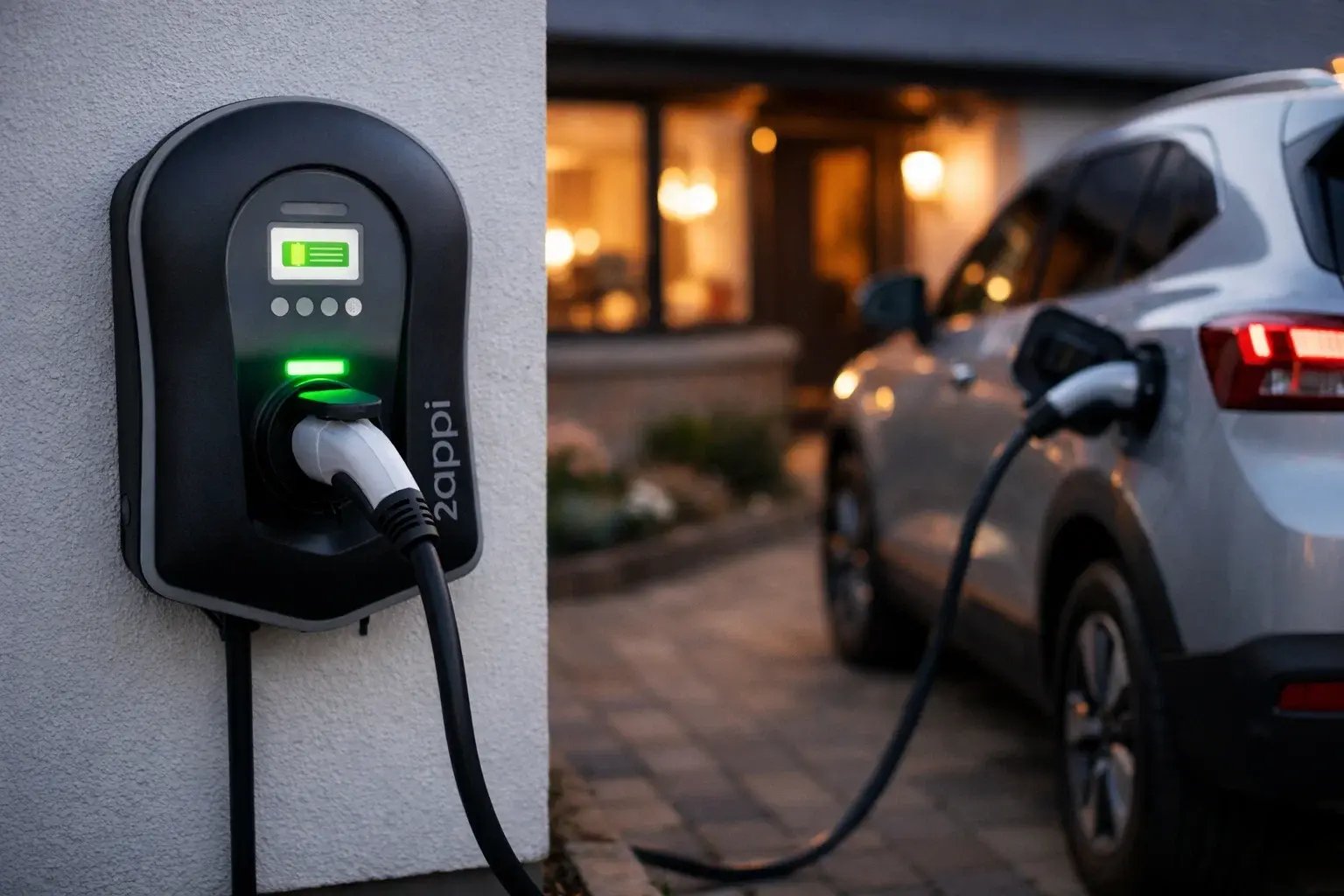
- Solar compatibility – smart chargers like the Zappi can use excess solar energy, reducing charging costs to near-zero
At the time of writing, the SEAI offers a €300 grant towards the purchase and installation of a home charger unit. This grant was reduced from €600 in January 2024, but still provides valuable support for homeowners making the switch.
Neighbourhood Charging: Addressing the Apartment Challenge
One of the strategy's priorities is expanding neighbourhood charging options for those without access to home charging. This particularly affects people living in apartments, terraced housing, and higher-density urban areas without dedicated parking spaces.
The strategy outlines plans to deliver accessible neighbourhood charging infrastructure, working closely with local authorities to identify suitable locations. This includes on-street charging solutions and charging hubs within residential areas.
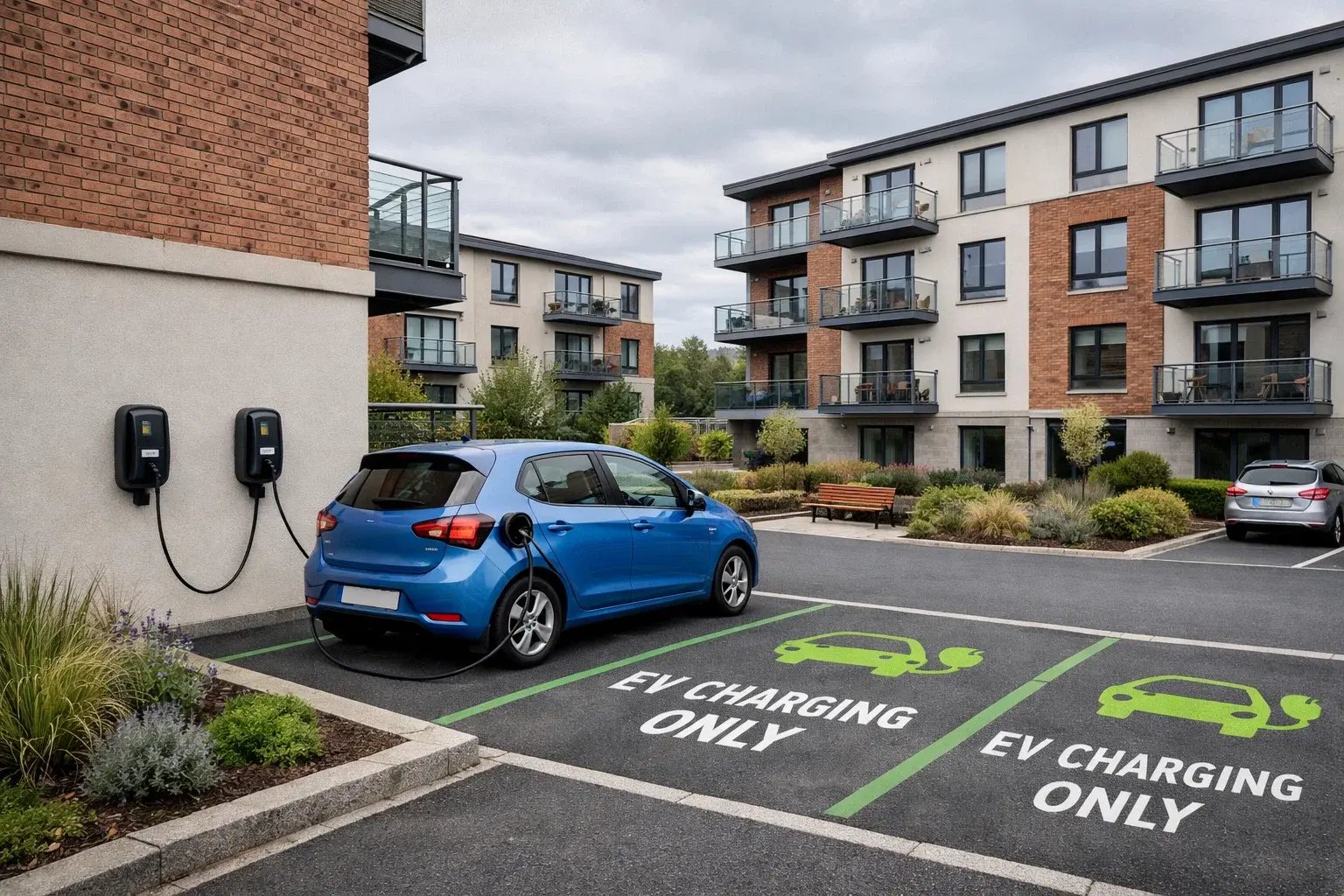
If you live in an apartment or housing development, this is positive news. However, installation timelines for neighbourhood infrastructure can be lengthy. If you have any access to dedicated parking, even in a shared development, it is worth exploring whether you can install a charger now. Many apartment complexes and management companies are becoming more accommodating as EV adoption grows.
WattCharger has experience working with management companies and can provide guidance on your specific situation during a free consultation.

High-Powered Charging for Long Journeys
The strategy commits to delivering high-powered charging hubs along national roads and main transport corridors. In October 2025, Minister O'Brien announced the locations of 90 new high-powered recharging pools to be rolled out under the ZEVI TII EV Recharging Infrastructure scheme.
These high-powered hubs are designed for rapid charging during long-distance travel, with charging speeds significantly faster than home charging. This addresses another common concern: "What if I need to drive to Cork or Donegal?"
The reality is that for most daily driving, home charging is sufficient. The average Irish driver covers around 30 to 40 kilometres per day, well within the range provided by overnight home charging. High-powered public infrastructure exists for the occasions when you travel beyond your vehicle's range.
What About Rural Ireland?
The strategy explicitly commits to maintaining a regional balanced rollout, ensuring rural areas are not left behind. Recent SIMI registration data shows EV adoption is growing rapidly outside Dublin, with counties like Wicklow (up 124% in January 2026), Roscommon (up 195%), and Cork (up 92%) seeing dramatic increases in EV registrations.
Rural homeowners are actually in an advantageous position for EV adoption. Most have:
- Off-street parking for home charging installation
- Larger roofs suitable for solar PV systems
- Lower dependency on public charging infrastructure
- Longer daily commutes that benefit more from EV running cost savings
The combination of solar panels in Ireland and a smart EV charger is particularly compelling for rural households, allowing you to power your vehicle with clean energy generated on your own roof.
The Role of Smart Charging
While not explicitly detailed in the public consultation documents, smart charging technology will play a critical role in Ireland's charging infrastructure strategy. Smart chargers allow users to:
- Schedule charging during off-peak hours when electricity is cheapest
- Prioritise solar energy when available
- Avoid overloading the grid during peak demand periods
- Monitor charging costs and energy usage
The Zappi EV charger and Ohme Home Pro are both smart chargers that integrate with time-of-use tariffs offered by Irish energy suppliers like SSE Airtricity, Electric Ireland, and Energia. This allows you to take advantage of cheaper night rates, reducing your charging costs by up to 50% compared to standard daytime rates.
Smart charging is particularly relevant as the grid transitions to higher levels of renewable energy. By charging your EV when wind generation is high and demand is low, you are supporting Ireland's climate goals while saving money.
Commercial and Fleet Charging
The strategy also addresses the needs of businesses and commercial vehicle operators. With targets to electrify public and commercial fleets, workplace and depot charging will become increasingly important.
If you are a business owner considering EV charging for your premises, the SEAI offers grants for businesses installing solar PV systems and EV charging infrastructure. WattCharger provides commercial solar and charging solutions tailored to Irish businesses.
Timeline and Next Steps
The public consultation on the Draft National EV Charging Infrastructure Strategy 2026-2028 is open until 5pm on 24 April 2026. Members of the public, local authorities, community groups, and businesses are invited to make submissions.
Following analysis of responses, a final strategy will be published later in 2026. A mid-term review in 2027 will assess progress and refine actions based on technological developments, infrastructure performance, and user needs.
What Should You Do Now?
If you are considering purchasing an EV or already own one, the strategy reinforces that home charging infrastructure is the most practical and cost-effective solution for the majority of Irish drivers.
Here is what you should consider:
If You Own Your Home with Off-Street Parking
Now is an excellent time to install a home EV charger, even if you have not yet purchased an EV. Benefits include:
- Locking in the current €300 SEAI grant (grant amounts can change)
- Avoiding installation delays when you purchase your vehicle
- Future-proofing your property (EV chargers add value)
- Choosing the best charger for your needs without time pressure
If You Have Solar Panels or Are Considering Them
A smart EV charger that integrates with your solar system maximises your savings. The Zappi charger can direct excess solar energy to your vehicle, meaning you charge for free during sunny periods rather than exporting that energy to the grid.
If you are planning to install solar panels, consider adding an EV charger at the same time. This reduces installation costs as the electrician can complete both jobs simultaneously. Read our guide on solar batteries and EV charging to understand how these technologies work together.
If You Live in an Apartment or Have No Off-Street Parking
The strategy recognises your needs and commits to expanding neighbourhood charging. However, this infrastructure will take time to roll out. In the meantime:
- Check if your apartment complex or development allows charger installation in designated parking spaces
- Engage with your management company about EV charging provisions
- Monitor local authority plans for on-street charging in your area
- Consider workplace charging if your employer offers it
WattCharger can provide advice on approaching management companies and navigating the approval process.

If You Are a Business Owner
Evaluate whether workplace charging could benefit your employees or customers. The strategy's focus on commercial infrastructure suggests increased support for businesses installing charging facilities. This can be a valuable employee benefit and demonstrates environmental commitment.
The Bigger Picture: Ireland's EV Transition
The Draft National EV Charging Infrastructure Strategy 2026-2028 is part of Ireland's broader commitment to electrify 30% of the private car fleet by 2030 under the Climate Action Plan. With EV registrations already exceeding 212,000 and January 2026 seeing record sales, Ireland is on track to meet these ambitious targets.
The strategy demonstrates that the government is taking a proactive, coordinated approach to infrastructure delivery, working with ZEVI (Zero Emission Vehicles Ireland), Transport Infrastructure Ireland, local authorities, and industry partners.
For Irish homeowners and drivers, this means you can make the switch to electric with confidence, knowing that both home and public charging infrastructure will continue to expand and improve.
Final Thoughts
Ireland's National EV Charging Infrastructure Strategy 2026-2028 provides a clear roadmap for the continued expansion of charging infrastructure across the country. While public and neighbourhood charging will improve, the strategy reinforces that home charging remains the primary and most practical solution for the majority of EV owners.
With €120 million allocated in 2026 alone and a commitment to stay ahead of demand, the government is signalling that Ireland's EV transition is accelerating. Whether you live in Dublin or Donegal, own a detached house or an apartment, the infrastructure to support your switch to electric is being built.
The best time to prepare is now. Installing a home charger before you purchase your EV means you will be ready from day one, avoiding delays and maximising the convenience and cost savings that make EV ownership so compelling.
Ready to Install Your Home EV Charger?
WattCharger offers SEAI grant-approved installation of smart EV chargers across Ireland. Our expert team handles everything from system design to grant paperwork, so you can start charging with confidence.
Browse our range of smart EV chargers or get in touch for a free consultation. We will assess your home, recommend the best charger for your needs, and provide a personalised quote including SEAI grant support.
Make EV EZ with WattCharger – Ireland's trusted provider of EV charging solutions.
Blog Author: Rowan Egan