


If you are considering solar panels for your Irish home, you have probably thought about more than just the financial savings. For many homeowners, particularly those in estates, terraced houses, or close-knit communities, a quieter concern lingers: "What will my neighbours think?"
It is a valid question. Your home does not exist in isolation, and being a considerate neighbour matters. The good news is that solar panels are one of the least intrusive home improvements you can make, and in many cases, they actually benefit the surrounding community.
This guide addresses the most common neighbour-related concerns about solar panels in Ireland, from glare and noise to visual impact and property values. By the end, you will understand what is myth, what is reality, and how to be a good solar neighbour.
The Most Common Neighbour Concerns About Solar Panels
Before we dive into the details, here are the five concerns we hear most often:
- Glare: Will reflected sunlight from my panels blind my neighbours or shine into their windows?
- Noise: Will the inverter or panels make humming, buzzing, or clicking sounds?
- Visual Impact: Will solar panels be an eyesore that affects the streetscape?
- Property Values: Will my installation reduce the value of neighbouring homes?
- Planning Objections: Can my neighbours formally object to my solar installation?
Let us address each one systematically.
1. Do Solar Panels Cause Glare That Affects Neighbours?
The Short Answer: Modern solar panels are designed to absorb light, not reflect it. Glare is rare and typically less than you would get from a standard window.
How Solar Panels Handle Light
Solar panels work by capturing photons (light particles) and converting them into electricity. To do this efficiently, they use anti-reflective coatings on tempered glass that minimise reflection. In fact, typical solar panels reflect only 2 to 5% of incoming light, compared to 10 to 20% for standard glass windows.
Think of it this way: your neighbours already see glare from your windows, conservatory, and even your car parked in the driveway. Solar panels produce significantly less reflection than any of these.
When Glare Might Occur
In rare cases, glare can be noticeable if:
- Panels are installed on a west or south-west facing roof at a steep angle
- The sun is at a low angle (early morning or late afternoon in winter)
- A neighbour's window happens to be in the direct reflection path
However, even in these scenarios, the glare is temporary (lasting 10 to 20 minutes) and far less intense than sunlight reflecting off a car windscreen or window.
The Irish Context
Ireland's relatively low sun angles and frequent cloud cover further reduce glare risk. Additionally, most Irish homes have south-facing panels designed to capture maximum sunlight, which means reflected light typically goes upward toward the sky rather than sideways toward neighbouring properties.
What You Can Do:
- Choose quality panels with anti-reflective coatings (all SEAI-approved systems use these)
- Mention your plans to immediate neighbours before installation as a courtesy
- If a neighbour raises concerns, a professional installer can assess sight lines and adjust panel angles if needed
For more on panel quality and installation standards, see: 10 Questions to Ask Before Hiring a Solar Installer in Ireland
2. Are Solar Inverters Noisy?
The Short Answer: Quality inverters produce 25 to 40 decibels of sound, quieter than a refrigerator. When installed in an attic or garage, the sound is barely audible inside your home and inaudible to neighbours.
Understanding Inverter Noise
Solar panels themselves are completely silent. They have no moving parts and generate no sound. The only potential noise source is the inverter, which converts DC electricity from the panels into AC electricity for your home.
Typical inverter noise levels (at time of writing):
- High-quality residential inverters: 25 to 40 decibels (dB)
- For comparison: Quiet library (30 dB), refrigerator hum (40 dB), normal conversation (60 dB)
Where Inverters Are Installed in Ireland
In Irish homes, inverters are typically installed:
- In the attic (most common)
- In a garage or utility room
- On an interior wall, away from living spaces
Because inverters are installed indoors and produce minimal noise, they are inaudible from outside your property. Even inside your home, most homeowners report never noticing inverter sound unless they stand directly next to the unit.
What About Neighbours?
Unless your inverter is mounted on a party wall in a terraced house (which is rare and not recommended), your neighbours will not hear it. The sound level drops significantly through walls and over distance.
What You Can Do:
- Ensure your installer uses a quality inverter from reputable brands (SolarEdge, Huawei, Fronius, GivEnergy)
- Request attic or garage installation to keep the unit away from living spaces
- Avoid mounting inverters on shared walls in semi-detached or terraced homes
For more on system components, read: Microinverters vs String Inverters: Which Is Better for Irish Homes?
3. Do Solar Panels Affect the Visual Appearance of a Street?
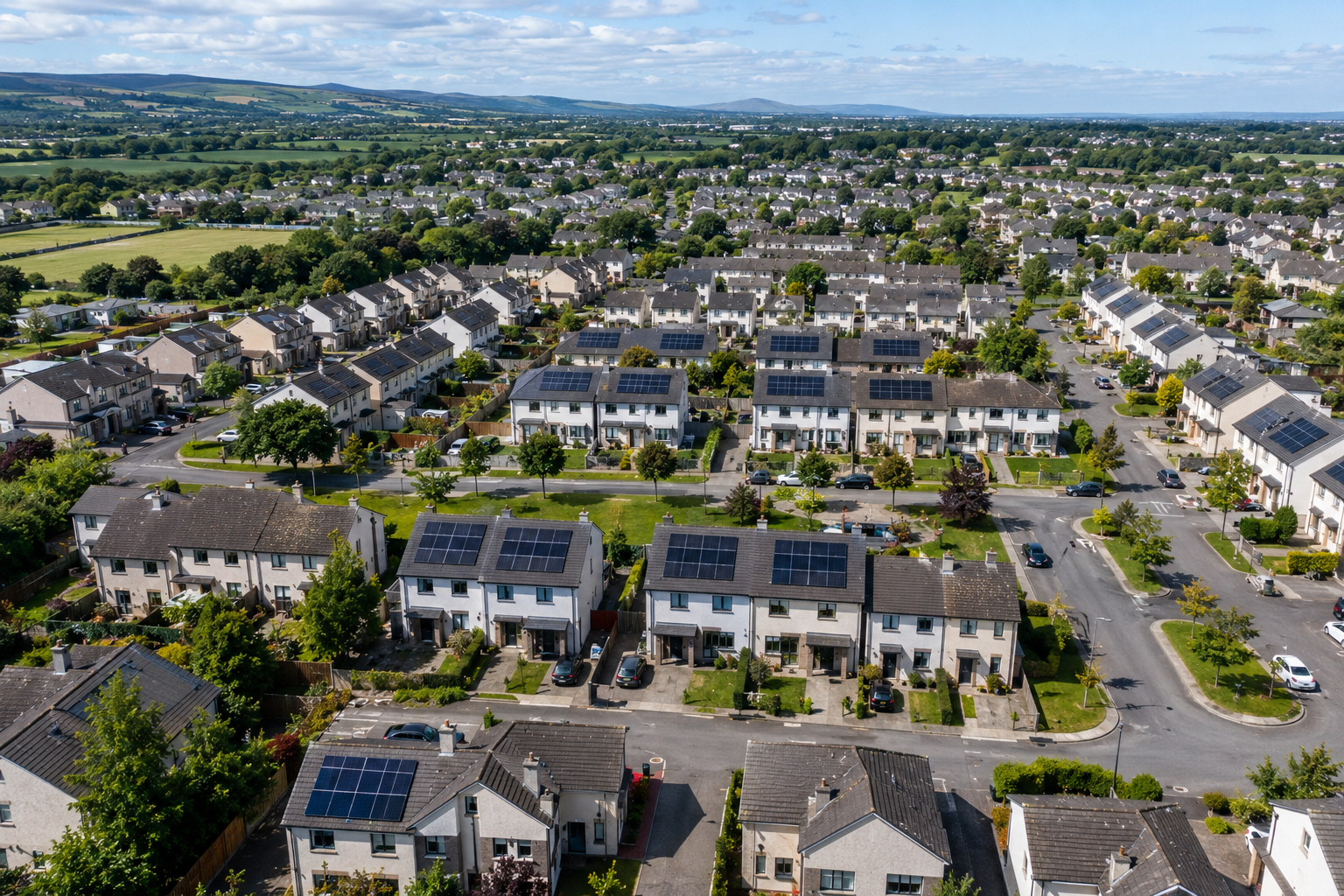
The Short Answer: Solar panels have become normalised in Irish neighbourhoods. With over 170,000 installations completed, most streets already have at least one solar home. Modern panels integrate well with roof aesthetics.
The Normalisation of Solar in Ireland
As of mid-2026, Ireland has over 170,000 residential solar installations. This means:
- One in approximately 12 Irish homes now has solar panels
- Most housing estates have multiple solar homes
- Neighbours are increasingly familiar with (and often curious about) solar installations
Rather than standing out as unusual, solar panels are becoming a visual marker of a forward-thinking, energy-conscious community.
Visual Integration Tips
Modern solar panels are designed to blend with roofs:
- Black panels on dark roofs: Creates a sleek, cohesive look
- Flush mounting: Panels sit close to the roof surface rather than protruding
- Full-roof coverage: Increasingly common and often more aesthetically pleasing than partial coverage
In fact, many homeowners report that neighbours ask about their panels out of interest rather than complaint, often leading to their own solar installations. Studies show that solar adoption spreads through communities like a positive contagion, with installations clustering on the same streets.
Listed Buildings and Conservation Areas
If your home is in an Architectural Conservation Area (ACA) or is a protected structure, planning permission may be required. In these cases, local authorities balance heritage preservation with climate action goals, and solar installations are often approved with conditions (e.g., panels not visible from the street).
For more details, see: Planning Permission for Solar Panels in Ireland
What You Can Do:
- Choose black or dark-coloured panels that complement your roof
- Work with an experienced installer who understands visual integration
- Inform your immediate neighbours before installation as a courtesy
4. Do Solar Panels Affect Neighbouring Property Values?
The Short Answer: Studies show solar panels increase property values, and this positive effect often extends to neighbouring homes in solar-dense areas.
The Evidence
Multiple studies from the UK, US, and Europe show:
- Homes with solar panels sell for 2 to 4% more than comparable homes without solar
- Buyers increasingly view solar as a desirable feature rather than a detraction
- Neighbourhoods with multiple solar homes often see overall value increases as the area becomes associated with modern, energy-efficient housing
In Ireland specifically, solar-equipped homes benefit from:
- Improved Building Energy Rating (BER), which is now a key selling point
- Lower ongoing electricity costs, making the property more affordable to run
- Future-proofed energy infrastructure as electricity prices continue to rise
The Neighbour Effect
Far from reducing nearby property values, your solar installation may actually help your neighbours when they come to sell. Buyers increasingly seek out areas where renewable energy is normalised, and a street with multiple solar homes signals:
- A proactive, well-maintained community
- Lower long-term energy costs for the neighbourhood
- Good roof condition (since solar requires structurally sound roofs)
For more on property value impacts, read: Do Solar Panels Increase Your Property Value in Ireland?
What You Can Do:
- Install a quality system that enhances rather than detracts from your home's appearance
- Keep panels clean and well-maintained
- Share your positive experience with neighbours who express interest
5. Can Neighbours Object to My Solar Installation?
The Short Answer: In Ireland, domestic solar panels are exempt from planning permission (with a few exceptions), meaning neighbours have no formal mechanism to object.
Ireland's Planning Exemption
Since October 2022, Irish planning law exempts most residential solar panel installations from planning permission requirements. This means:
- You do not need to apply for planning permission
- Neighbours cannot lodge formal planning objections
- No public consultation period is required
Exceptions (planning permission required):
- Protected structures or buildings in Architectural Conservation Areas (ACAs)
- Ground-mounted systems over certain sizes
- Properties subject to specific planning conditions
For the vast majority of Irish homeowners with standard roof-mounted systems, installation proceeds without planning involvement.
What If a Neighbour Complains Informally?
If a neighbour raises concerns about glare, visual impact, or other issues:
- Listen respectfully and take concerns seriously
- Explain the technical reality (e.g., minimal glare, no noise)
- Offer to share information from your installer
- In rare cases, minor adjustments (panel angle, placement) may address concerns
However, neighbours have no legal grounds to prevent or stop your installation under current Irish planning law, provided it meets exemption criteria.
For more on planning rules, read: Planning Permission for Solar Panels in Ireland
Tips for Being a Good Solar Neighbour
Even though you are not legally required to consult neighbours, a courteous approach builds goodwill and strengthens community relationships.
Before Installation
1. Inform Immediate Neighbours A quick conversation or note letting adjoining neighbours know you are installing solar panels:
- Shows respect and courtesy
- Gives them a chance to ask questions
- Prevents surprise when installers arrive
2. Choose a Reputable, SEAI-Registered Installer Quality installation minimises any potential issues:
- Professional appearance
- Proper mounting and wiring
- Compliance with electrical safety standards
3. Share Your Motivations Explain why you are going solar:
- Reducing electricity bills
- Environmental benefits
- Energy independence
- Setting a positive example for the community
During Installation
4. Minimise Disruption
- Choose reasonable working hours (typically 8am to 6pm on weekdays)
- Ensure installers park considerately
- Keep installation timeframe short (most systems inst
After Installation
5. Keep Panels Clean and Well-Maintained A clean, well-maintained system looks better and performs better.
Read: How Often Should You Clean Solar Panels in Ireland?
6. Share Your Experience If neighbours ask about your system:
- Share performance data and savings
- Recommend your installer if you had a good experience
- Offer to show them your monitoring app
Many solar installations lead to cluster effects, where neighbours follow suit after seeing positive results firsthand.
What Research Shows About Solar and Community Relations
Studies from the UK and Europe consistently find:
- Over 85% of neighbours have neutral or positive reactions to nearby solar installations
- Complaints are rare (less than 1% of installations)
- Solar adoption spreads within communities as neighbours see benefits
- Older, established neighbourhoods adapt to solar just as readily as new developments
In Ireland specifically, the rapid growth to over 170,000 installations with minimal reported neighbour disputes suggests solar has been well-accepted across diverse communities.
Final Thoughts
The question "Will solar panels annoy my neighbours?" is rooted in genuine community consideration, and that is admirable. The reality is that solar panels are one of the least intrusive home improvements you can make. They produce minimal glare, virtually no noise, and have become a normalised part of Irish streetscapes.
Rather than detracting from your neighbourhood, your solar installation may inspire others to follow suit, creating a more energy-independent, cost-conscious, and environmentally responsible community.
If you approach your installation with courtesy, choose a quality installer, and maintain your system well, the likelihood of neighbour complaints is extremely low. And if a concern does arise, it can almost always be addressed through respectful communication.
Being a good neighbour and going solar are not in conflict. They are both part of building the kind of community you want to live in.
Ready to Join Ireland's Solar Revolution?
WattCharger offers expert solar panel installation across Ireland, using quality equipment and professional practices that respect both your home and your community. All our installations are performed by SEAI-registered, Safe Electric certified electricians.
Get your free solar assessment to see how solar can work for your home, or read more about what to expect:
Blog Author: Rowan Egan